One question: how to provide spatial truth to an artificial intelligence. No volume, no intelligent decision. Five ways were tried. One path is integer-exact. Four fields are already written on it — and four case studies are detailed below, computed on real data.
FOUR CASE STUDIES · REAL DATA & PROOFS
Calculated on real data, verified by Lean.
Before the four fields, four studies you can examine: a cube inflated into its sphere across seams, a CT registered on a radiograph with a Lean certificate, an audit of Google ForTy global forest rasters across 1.39 trillion pixels, and three CERN benchmarks on decentralised medical AI compliance, lesion leakage, and data-free curvature.
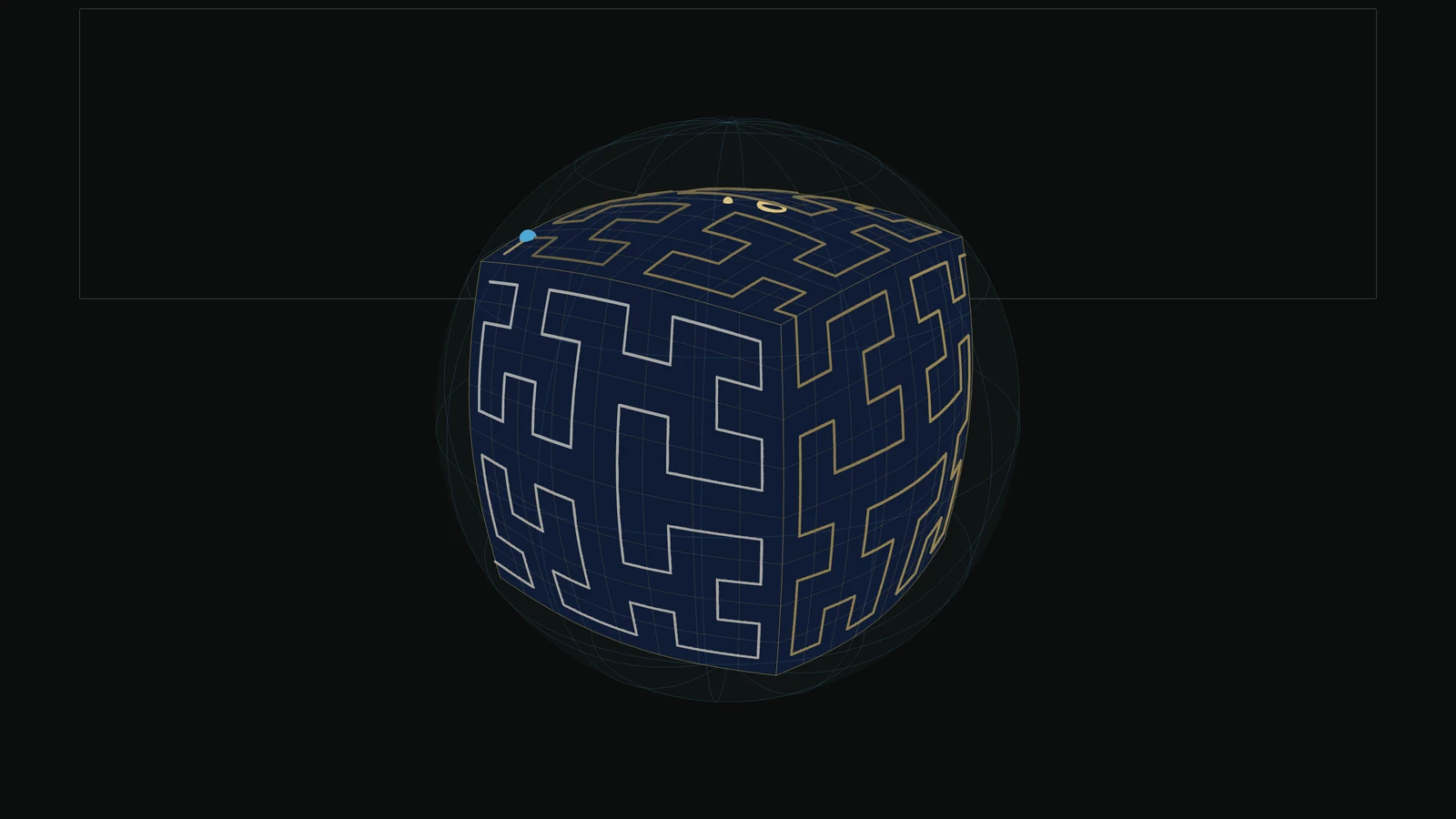
A 10 m tile is not 10 m at the pole, and two neighbouring grids do not agree at their seam. One Gray metacurve walks the six faces of the cube and gives every cell one address, from Geneva to Svalbard.
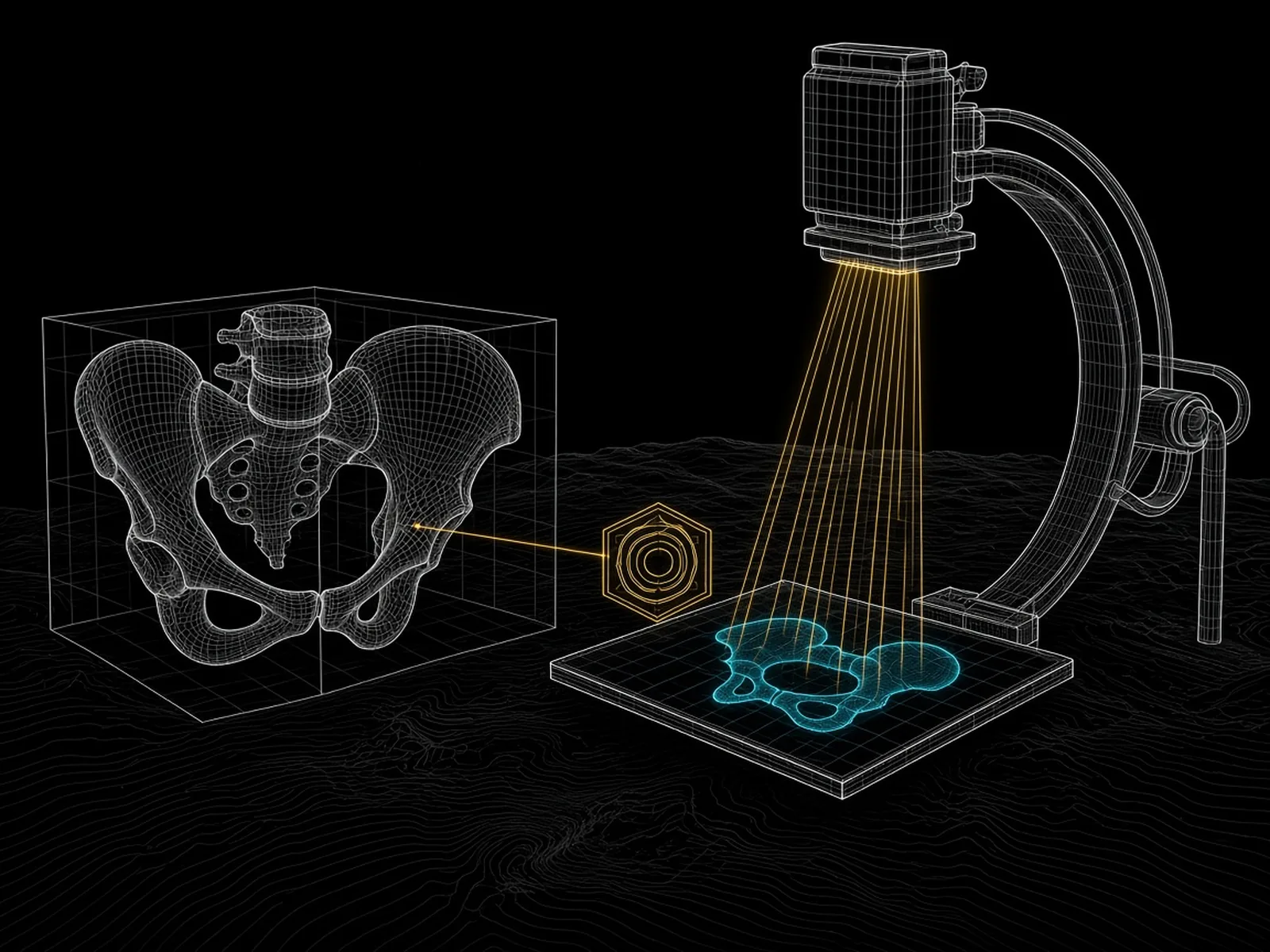
A pre-operative CT registered on an intra-operative radiograph: six exact numbers, a bounded error, and a Lean verdict that certifies the pose or refuses it. Twelve real cases, replayable.
Auditing Google DeepMind / WRI ForTy 2020 across 1.39 trillion valid pixels: 0 ha defect, 57.9 Mha of zone duplicates removed, and EUDR plot certificates proved by Lean 4.
Auditing 2,131 chest radiographs in DeMICAF with zero training, unveiling lesion leakage in HAM10000, and providing data-free non-stationary geometric priors for DP-KFC curvature.
Score 4 geometric compliance causes
Audit lesion leakage on HAM10000
Align DP-KFC curvature eigenspaces
Protected case study (SGDL signature) →
Only one of the five ways is exact
The journey to a spatial fact. Four of the ways stop short of a decision an AI can trust. The fifth was built for the problem.
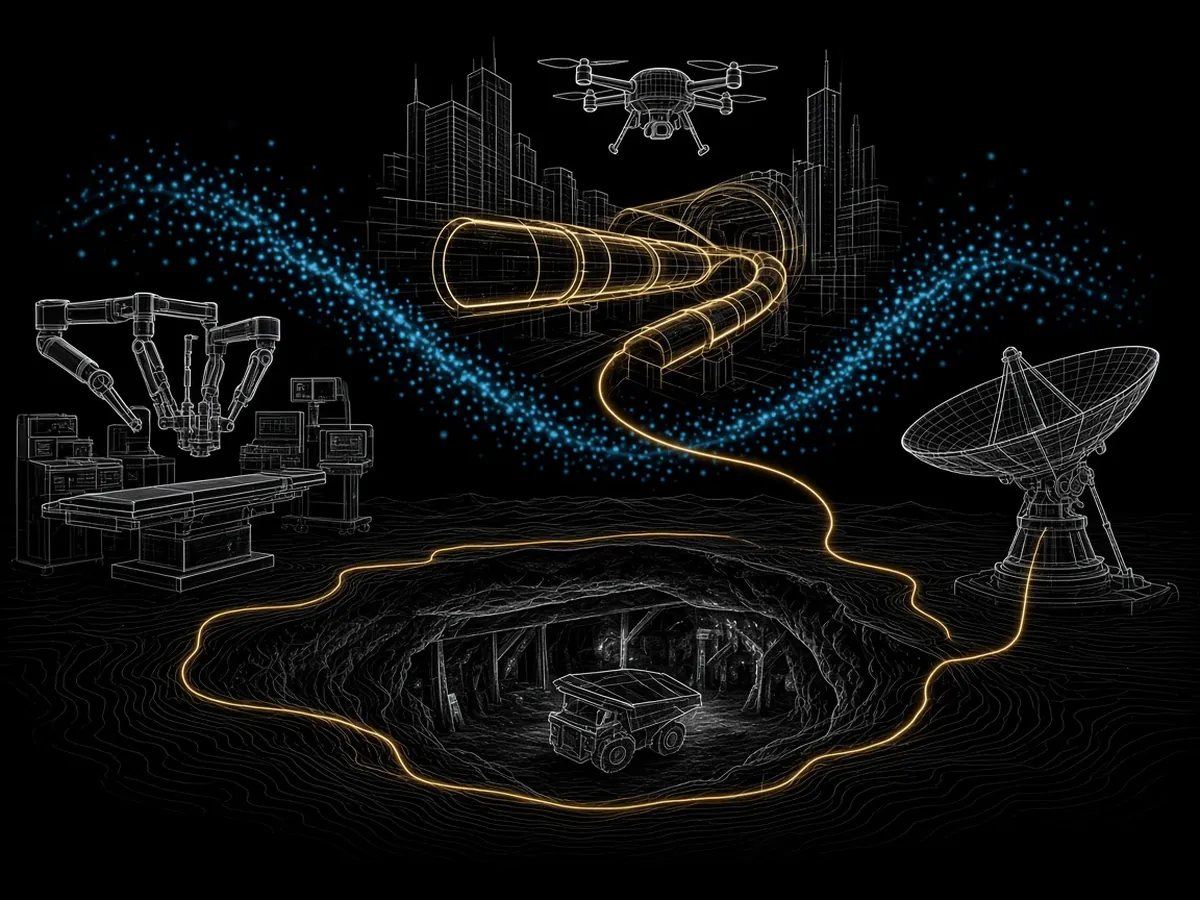
Four critical scenes ask the same question: an operating room, a drone corridor over a city, a mine gallery, a radar. A probability cloud describes them. An exact solid decides.
01 Polygonal Outside.
Surfaces for the eye — perspective (Uccello, c. 1420), shaded display (Gouraud, 1971), then GPUs and splats. Image, not matter. No construction, no volume.
02 CSG Problematic.
Set logic applied to volumes (Requicha, 1977). Classifying a point as in, on or out breaks on floating point.
03 B-Rep Problematic.
Boundary surfaces for CAD (Braid, 1973). Point-in-solid is costly and unstable. Fit for an engineer, not for a real-time AI.
04 Voxels Conditional.
The cell, from crystallography (Haüy, 1784). Friendly to an AI, and without logic or topology — sound when the Arithmetics of Forms pilots the output.
SGDL
05 Arithmetics of Forms The SGDL path
Geometry as primitive recursive functions (Péter, 1951; Rotgé, 1997). Integer-exact, polynomial, ready to run in parallel. Built for the question.
Primitive recursive functions are the geometry (Péter, 1951; Rotgé, 1997). The lambda calculus carries them into a programming language (Church, 1936). It is a symbolic calculus: the λ notation, and formal rules of evaluation and substitution, give a mathematical function one reading. Functional programming stands on both — recursive functions (Gödel, Herbrand, Kleene) and the lambda calculus.
The writing is Scheme, the Lisp dialect built as an interpreter of the lambda calculus (Sussman and Steele, 1975). The thesis writes the recursive arithmetic and the forms in that language. Procedures of the system — the gluing of simplices, the computation of densities — are built with the form lambda. That is SGDL-Scheme, 2000.
This indexation is the work of 2025–2026. The approach is patented: a method and system for indexing an n-dimensional object.
Modelling writes a solid. Simulation runs it. Communication carries it to another machine. Encryption protects the signal with the same geometry. None of these gives the solid an address. Indexation does. It was the missing pillar beside modelling, simulation and communication: space-driven, or data-driven, on the theory of Gray metacurves.
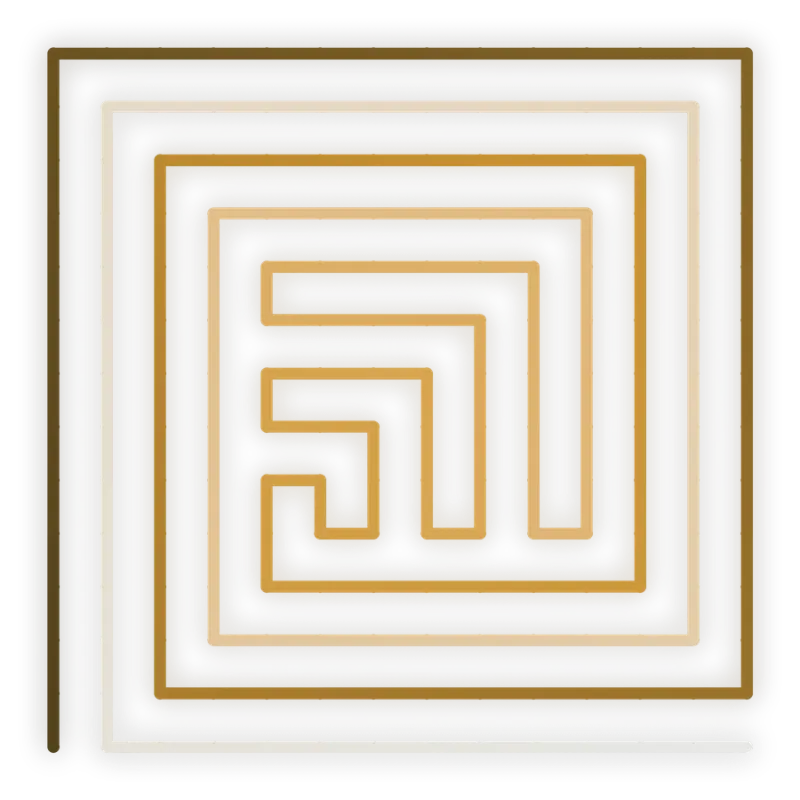
A Gray curve visits every cell and steps to a neighbour, so cells that touch in space touch in the index. Peano, Hilbert and Wunderlich are the historical Gray curves. Cantor, Lebesgue, the projective Cantor curve and the semi-Gray curves also fill a square, without that one-step neighbourhood. The theory takes both lines. It classifies the turns, the motifs those turns produce, then composes the motifs into metacurves — a curve whose step is itself a curve — and assembles them as composites and rotors. Enumeration builds the path in integers. The same construction leaves the square for n dimensions: the curves, the metacurves, the volumes an address can name, the cuts through those volumes, and the curves that follow a surface rather than a flat grid. The cubo-sphere is that last case.
A query follows the space, or the data. The index is the address either way. No data is captured: real data stays where it is, and a synthetic solid is something an AI can check. The exolanguage is the engine that describes, indexes and infers those solids. It is not a note attached to a mesh. Its name is Spatial General Descriptive Language, and it now also infers.
The taxonomy
Historical two-dimensional filling curves, lifted to n-dimensional hyperstructures. Gray and non-Gray curves feed the families. The families become two-dimensional metacurves, then n-dimensional ones.
Gray
Peano, Hilbert, Wunderlich, and what exploration still finds.
Not Gray
Cantor, Lebesgue, projective Cantor, semi-Gray.
A Generators U, W, Uw, Wu — how a curve enters a cell and leaves it.
B Motifs: lacets, meanders, spirals, stairs, a super-Hilbert, kernels, centres, reflections.
C Two-dimensional Gray metacurves — the motifs composed.
D Composites chain distinct tiles into one path. Rotors nest one curve inside another.
E Enumeration: depth-first search, and backbite. The path is built in integers.
F Enumerative Gray curves in n dimensions — the same one-step neighbourhood, off the square.
G Metacurves in n dimensions — the composition, off the square.
H Hyperblocks and hypershells — the volumes an address can name.
I Hyperplanes, hyperslabs, hypercolumns — the cuts through those volumes.
J Curvilinear Gray curves — the index follows a curve drawn on a surface. The cubo-sphere.
K Exocurves of Gray in n dimensions.
L Xenocurves of Gray in n dimensions. With the exocurves, they close the figure.
As set out for the Open Geospatial Consortium, 28 August 2026.
Four fields
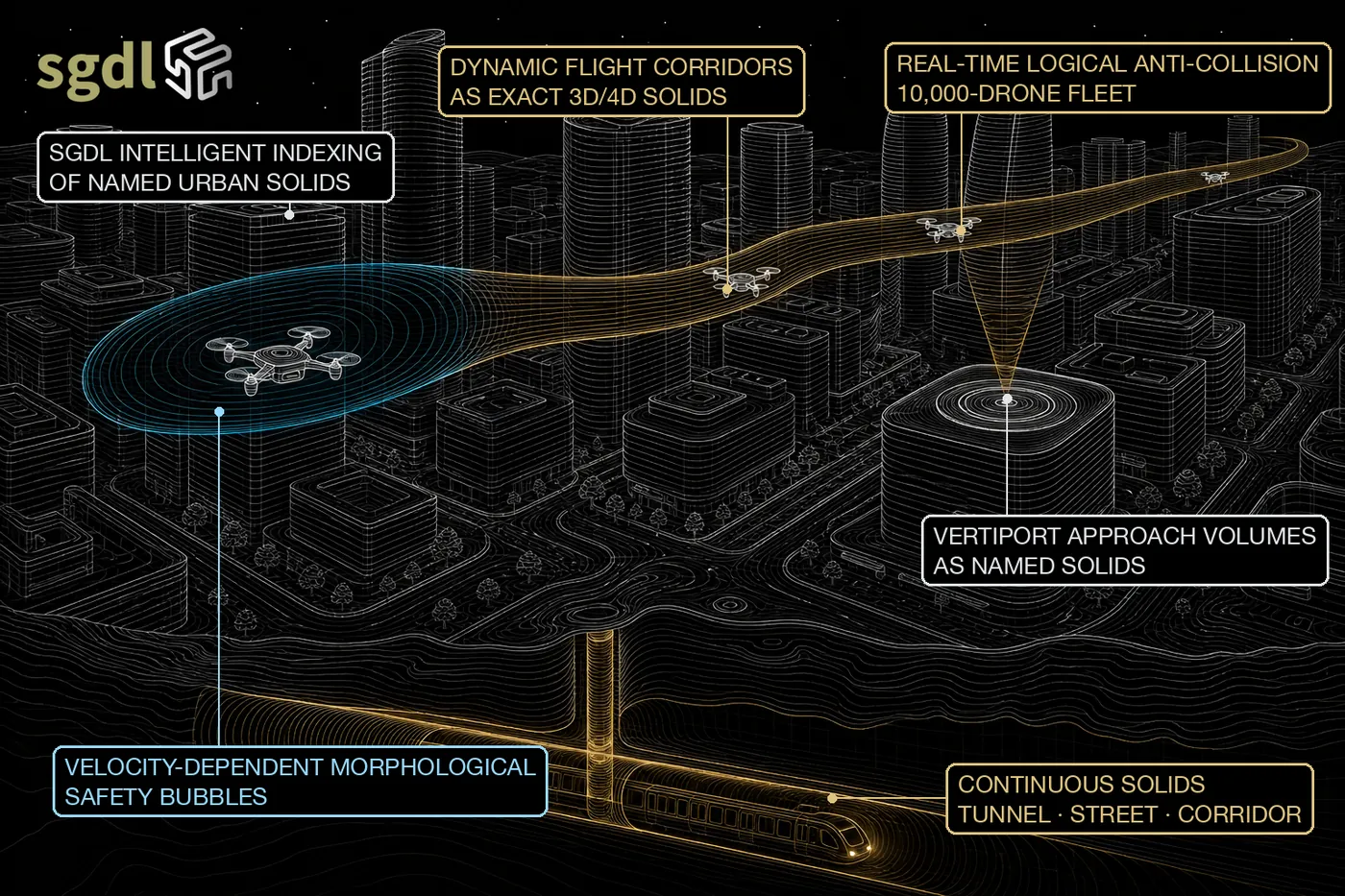
Low-altitude economy
Exclusion zones, corridors and safety volumes as named solids, not as metadata on a mesh.
Exact 3D and 4D corridors. Dynamic flight corridors and exclusion volumes are strict solids, inferred by the Arithmetics of Forms.
Morphological safety bubbles. A volume around each aircraft that depends on its velocity — a conflict is seen before it happens.
Fleet-scale anti-collision. Real-time logical intersection for a drone fleet over a city.
One model across milieux. The same solid runs from the transit tunnel to the street to the low-altitude corridor.
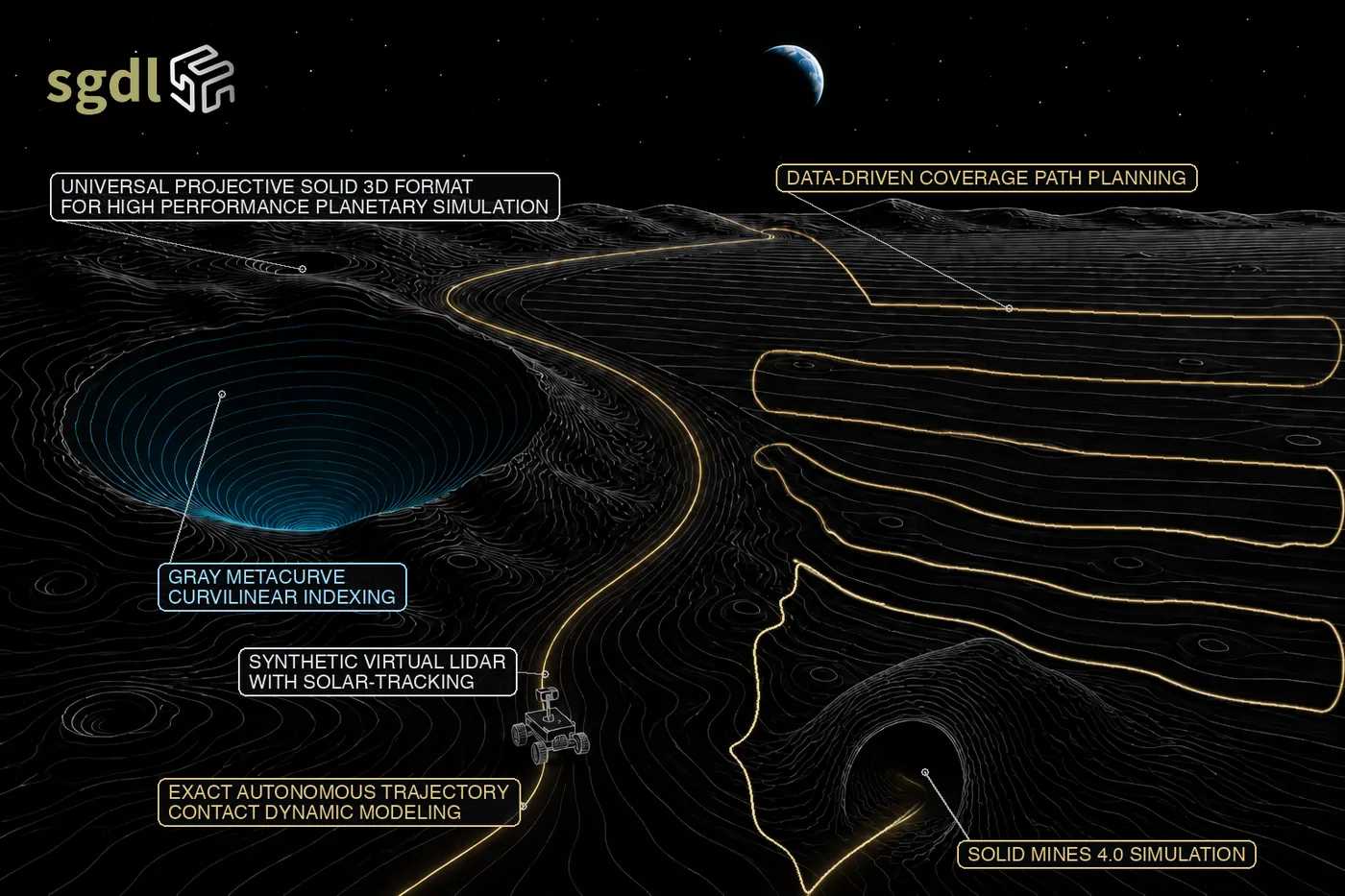
Planetary world model
GNSS-free autonomy on exact terrain, from the Moon outward.
Curvilinear indexing. Craters, slopes and cavities described exactly — no triangulation, no GNSS.
A universal projective solid. High-performance planetary simulation, anchored to public LRO/LOLA elevation models.
Synthetic virtual LiDAR. A real capture and a simulated beam land on the same exact chords, with solar tracking.
A frugal loop. Contact-dynamic trajectories and data-driven coverage, on CPU or FPGA, without a GPU.
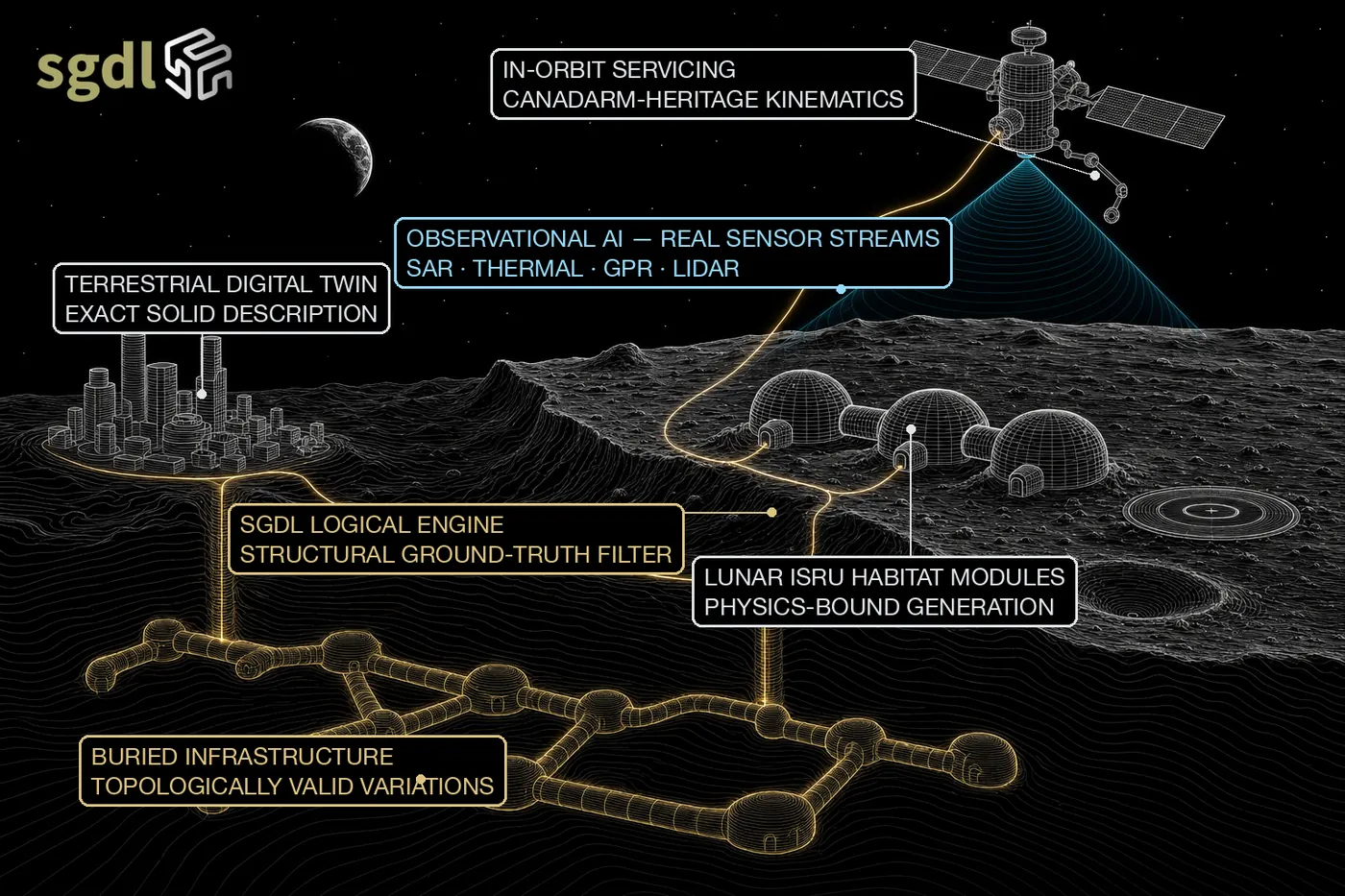
GEO-TRUST-SPACE
Observational AI and attested synthetic data, in one scene an AI can verify.
Observational AI. Real sensor streams — SAR, thermal, ground-penetrating radar, LiDAR — detect what is there.
A structural filter. The logical engine rejects any generated structure that is physically impossible.
Synthetic data with a provenance. Exact 3D and 4D solids, each with a manifest, ready for training.
Four milieux, one exolanguage. Terrestrial, underground, planetary and orbital infrastructure in a single exact scene.
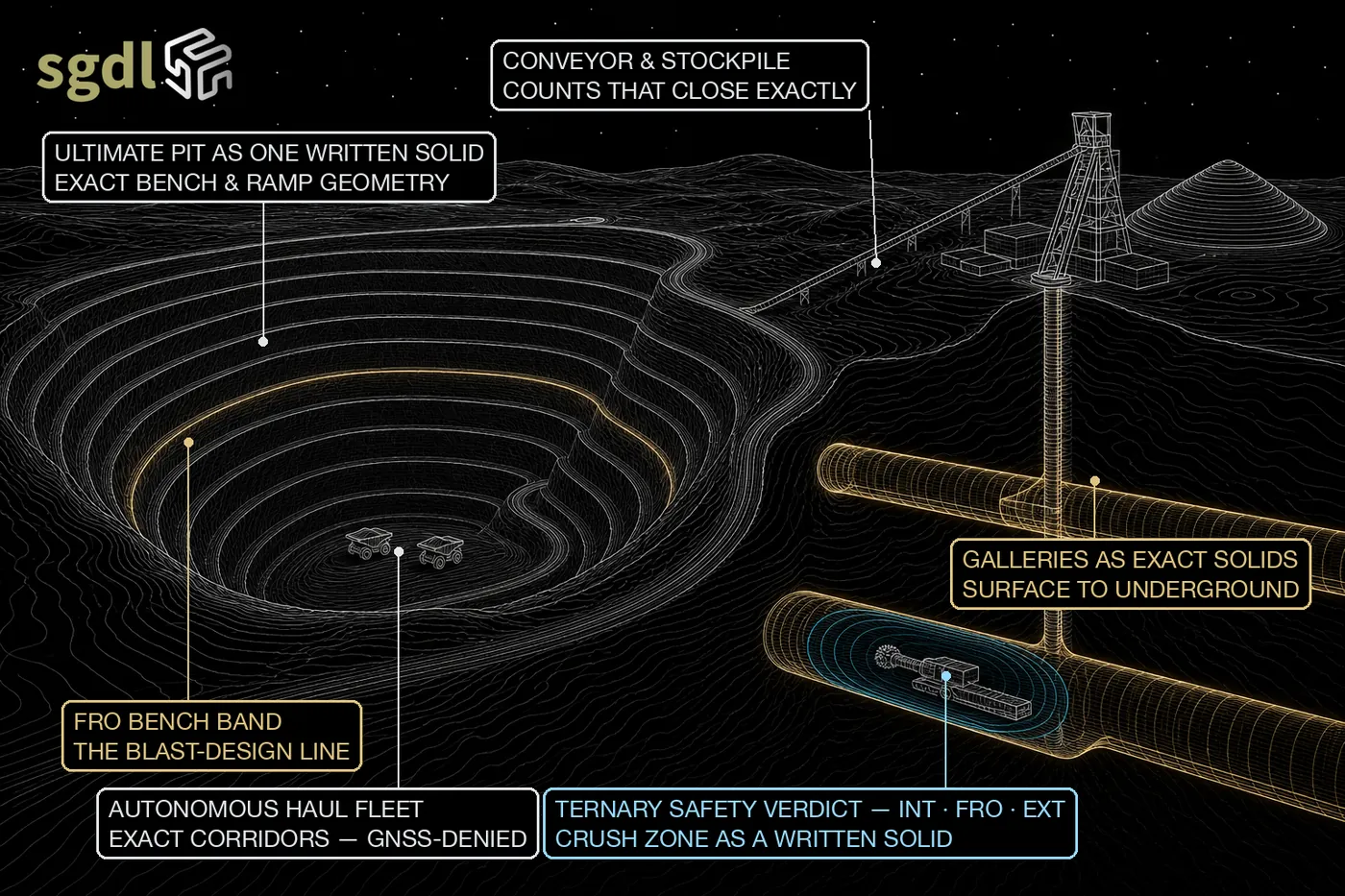
Mining 4.0
The autonomous mine: crush zones, galleries and pit shells as written solids, not meshes.
Ternary safety verdicts. Interior, frontier or exterior, on integer coordinates. Entering a zone is the verdict frontier.
Exact planning ledgers. The ultimate pit is one written solid. The frontier band is the blast-design line. Counts close on 200,000 panels.
A virtual sensor suite. Bit-exact renders, synthetic LiDAR on the same chords as a real capture, infrared by the nature of the solid.
Frugal at the edge. Integer arithmetic, without a GPU: the language model explains, and never measures.